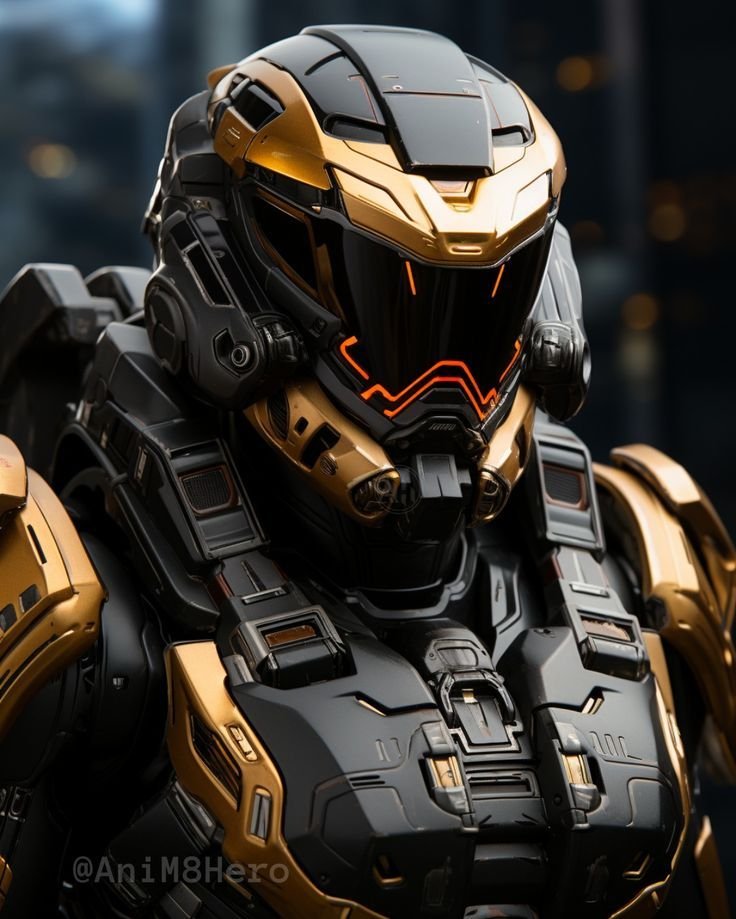
The future of Halo isn't just about Spartans, Covenant, and the epic struggle for humanity's survival; it's also about algorithms, machine learning, and generative artificial intelligence. Halo Studios is reportedly making "Developing Halo Game Concepts with AI" a core strategy, weaving advanced AI tools into nearly every facet of its future game development — from crafting sprawling alien worlds and designing cunning enemy behaviors to streamlining internal project workflows and meeting tight deadlines.
This isn't just a fleeting trend. It's a fundamental shift, positioning Halo Studios as a high-profile test case in how next-generation AI can redefine the very process of creating monumental gaming experiences. Forget the science fiction of killer robots; think of AI as an indispensable co-pilot for human ingenuity.
At a glance: Halo Studios' AI Evolution
- Comprehensive Integration: AI is being integrated across workflows, world-building, enemy AI, and even internal scheduling.
- Goal: Enhance developer productivity, accelerate iteration, and enable richer, more responsive game experiences.
- Empowerment, Not Replacement: AI is positioned as a tool to augment human creators, helping them generate ideas, speed up prototyping, and focus on creative refinement.
- Strategic Alignment: This move reflects Microsoft's massive, multi-billion dollar investment in AI infrastructure and expertise.
- Nuanced Understanding: While Generative AI is the buzzword, its practical application in game development often blends with sophisticated procedural generation techniques.
- Industry-Wide Trend: Other major studios like Bungie and PlayStation are also actively exploring AI's creative potential.
The New Frontier: Why Halo Studios is Leaning into AI
The landscape of game development is constantly evolving, but few shifts have felt as profound as the current embrace of artificial intelligence. For a studio as iconic as Halo, known for its intricate lore and cutting-edge technology, this pivot toward Developing Halo Game Concepts with AI isn't just about staying competitive; it's about pushing the boundaries of what's possible.
Microsoft, the parent company of Xbox Game Studios and thus Halo, is betting big on AI, earmarking an astounding $80 billion for FY 2025 to build AI-enabled data centers. This massive investment signals a company-wide commitment, and Halo Studios is clearly at the forefront of applying this strategy to its premier franchises.
We've seen evidence of this strategic alignment at multiple levels. The appointment of Angela Hession as Halo Studios' Chief of Staff, for instance, is telling; she brings a background rooted in AI-driven productivity. Furthermore, Halo developers are actively pursuing generative AI qualifications, and Xbox Game Studios has been seeking Applied Scientists specifically for machine learning across its vast portfolio of titles, including Halo. This isn't just about buying tools; it's about building an AI-native workforce.
Beyond the Buzzword: What "AI for Halo Concepts" Really Means
When we talk about Generative AI, especially in the context of creating something as complex as a Halo game, it's easy to conjure images of AI autonomously designing entire levels or writing scripts. The reality, as Halo insider RebsGaming clarified, might be closer to a sophisticated blend of traditional procedural generation augmented by AI. This distinction is crucial.
Procedural generation traditionally uses algorithms to create content (like terrains, levels, or textures) based on predefined rules and parameters. Think of it as an intelligent randomizer with guardrails. Generative AI, on the other hand, learns from vast datasets to create novel content that often transcends explicit rules, producing text, images, or even 3D models with a level of creativity that can surprise.
In the context of Halo, these two approaches aren't mutually exclusive. Generative AI could inform and enhance procedural generation, making the generated content more contextually relevant, aesthetically cohesive, or narratively intriguing. Imagine AI suggesting novel biome variations that fit Halo's established art style, or proposing enemy behaviors that feel genuinely alien yet tactically sound.
Crucially, the focus remains firmly on augmentation, not replacement. A 2024 job posting for a Halo Studios Senior AI Engineer explicitly stated the role would "leverage generative AI and ML to augment in-game experiences and to improve how we make games." The keywords here are "augment" and "improve how we make games" – positioning AI as a powerful assistant that empowers human creators, not as a substitute for their vision or skill. This principle aligns with what we're seeing across the industry, with studios like Bungie experimenting with their "BunGPT" and PlayStation's Dark Outlaw Games utilizing Midjourney, Stable Diffusion, and ChatGPT for conceptual work. The aim is to free up developers from repetitive tasks, allowing them to focus on high-level creativity and fine-tuning. For more insights into these broader applications, explore the rapidly evolving world of Halo AI generated content.
Imagining Worlds, Designing Threats: Practical Applications of AI in Halo Concepting
So, how exactly does AI help in Developing Halo Game Concepts with AI? It's not about relinquishing creative control, but about supercharging the initial ideation and iteration phases. Think of AI as an incredibly fast, endlessly patient brainstorming partner.
World-building and Environmental Storytelling
Halo's worlds are central to its identity – from the sprawling Forerunner rings to the desolate ruins of alien civilizations. AI can dramatically accelerate the early stages of world design:
- Biome Generation: An AI could analyze existing Halo environments, then generate hundreds of unique biome concepts based on specific parameters (e.g., "Forerunner architecture + jungle," "desert + Covenant ruins"). This provides artists with a rich palette of starting points.
- Landmark Ideas: Feed AI concept art or lore snippets, and it could suggest unique landmark designs for a new map or campaign level – a crashed Covenant cruiser overgrown with alien flora, a hidden Forerunner installation, or a human outpost on a distant world.
- Micro-Lore Prompts: AI could generate small, atmospheric story hooks embedded within environments – graffiti in a deserted corridor, a lost data log, or visual cues hinting at past conflicts, adding depth without requiring massive human investment upfront.
Crafting the Covenant and Beyond: Enemy AI & Behavior
The Covenant, the Banished, the Flood – Halo's enemies are as iconic as its heroes. AI can help create new foes and evolve existing ones:
- New Enemy Archetypes: Based on existing enemy factions, AI could propose novel creature designs, complete with suggested weaknesses, attack patterns, and lore connections. Imagine an AI generating concepts for a new type of Brute, optimizing its armor and weapon loadout for specific combat scenarios.
- Dynamic Combat Patterns: Beyond basic pathfinding, AI could simulate and suggest complex squad tactics for enemies, making encounters less predictable and more challenging. It could even propose how different enemy types might synergize in combat.
- Reactive Intelligence: For future Halo games, AI could enable enemies to dynamically adapt to player strategies, learning from player behavior in real-time to offer a more personalized and formidable challenge. This isn't just about difficulty scaling; it's about intelligence.
Narrative Seeds and Mission Structures
While the core narrative will always be human-driven, AI can be a powerful catalyst for story and mission design:
- Plot Point Brainstorming: Give an AI a conflict, a character, and a setting, and it can generate dozens of potential plot twists, character dilemmas, or mission objectives. This provides writers with a vast array of narrative branches to explore.
- Quest Idea Generation: For live-service or open-world Halo experiences, AI could help churn out variations of side quests, challenges, and objectives, maintaining freshness and engagement over time.
- Dialogue Prompts: AI can assist in generating natural-sounding dialogue snippets or character interactions, giving writers a starting point to polish and infuse with that signature Halo wit and gravitas.
Prototyping Gameplay Mechanics
Game development thrives on iteration. AI drastically speeds up the prototyping phase:
- Weapon Concepts: An AI could generate hundreds of weapon designs, complete with suggested stats, firing modes, and visual aesthetics, based on desired combat roles (e.g., "high-impact Covenant sniper rifle").
- Vehicle Designs: From a new variant of the Warthog to entirely alien transports, AI can help designers rapidly visualize and test various vehicle forms and functions, considering factors like armor, speed, and passenger capacity.
- Physics and Interactions: AI-powered simulation tools can quickly assess how new mechanics might interact with the game's physics engine or existing systems, identifying potential issues or unexpected opportunities early in the concept phase.
Accelerating Creativity, Not Replacing It: The Human-AI Collaboration
The true power of Developing Halo Game Concepts with AI lies in the synergy between human creativity and artificial intelligence. This isn't a scenario where AI works in a vacuum; it's a dynamic partnership.
Imagine a concept artist sketching ideas for a new alien creature. They might input their initial sketch into an AI model, asking it to generate ten variations, experimenting with different textures, limbs, or facial features. The artist then picks the most promising variations, refines them, and adds their unique artistic flair. The AI didn't create the creature; it expanded the possibilities and accelerated the ideation process.
For game designers, an AI could rapidly prototype a new level layout or a combat arena, placing environmental assets, enemy spawns, and cover points. The designer then jumps into the prototype, plays it, identifies strengths and weaknesses, and uses their expertise to hand-tweak, optimize, and inject that "Halo feel" that only human intuition can provide.
The role of "Applied Scientists" and "Senior AI Engineers" within Halo Studios underscores this collaborative approach. These aren't artists or writers in the traditional sense; they are experts in building and training the AI models, ensuring they understand the nuances of the Halo universe, and creating the interfaces that empower creative teams to use these tools effectively. They are the architects of the augmentation.
The Road Ahead: Challenges, Opportunities, and Ethical Considerations
While the promise of AI in game development is immense, the journey isn't without its complexities. Halo Studios, as a high-profile test case, will inevitably navigate these challenges:
- Maintaining Artistic Vision: The biggest concern is ensuring that AI-generated content truly enhances and complements the established Halo aesthetic and lore, rather than diluting it. The "Halo feel" is sacrosanct, and human oversight will be paramount to prevent AI from straying too far from this core identity.
- Bias in AI: AI models learn from data, and if that data contains biases, the AI's outputs will reflect them. Ensuring diverse and representative training data, along with careful human review, is essential to avoid perpetuating harmful stereotypes or creating homogenous content.
- Data Privacy and IP: The legal and ethical implications of using large datasets to train AI, particularly concerning intellectual property, are still being ironed out across industries. Halo Studios will need robust policies to navigate these waters.
- Over-reliance: The temptation to let AI do too much could lead to generic or soulless content. The balance between efficiency and genuine artistic expression will be a constant calibration.
Despite these challenges, the opportunities are profound. Faster iteration cycles mean developers can experiment more, leading to potentially richer, more innovative gameplay experiences. AI can handle the grunt work, allowing human talent to focus on polishing, storytelling, and injecting the unique personality that makes Halo legendary. Future projects, reportedly including a live-service multiplayer game and even a potential Halo: Combat Evolved remake, will serve as ideal testbeds for these AI-driven development processes, pushing the boundaries of what a Halo game can be.
Empowering Your Own Creative Process with AI (Even Outside Halo)
The principles Halo Studios is adopting for Developing Halo Game Concepts with AI aren't exclusive to AAA game development. You can leverage similar approaches in your own creative endeavors, whether you're an aspiring game designer, a writer, an artist, or just looking to spark new ideas:
- Brainstorming Partner: Use large language models (like ChatGPT or Google Gemini) to generate ideas for plot points, character backstories, level themes, or even simple puzzles. Prompt them with specific constraints and ask for variations.
- Visual Prototyping: Tools like Midjourney or Stable Diffusion can turn your text prompts into visual concepts incredibly quickly. Need to visualize a new alien species or a futuristic weapon? These tools can generate dozens of images in minutes, offering a rapid way to explore different aesthetics.
- Content Generation for Repetitive Tasks: If you're building a game, AI can help generate placeholder text, item descriptions, or even basic environmental assets, freeing you up for the more unique creative work.
- Learning and Research: AI can rapidly summarize complex topics or help you explore different design philosophies, accelerating your research phase.
Remember, the goal is always to use AI as a tool to amplify your human creativity, not replace it. Your unique vision, critical thinking, and artistic judgment remain the most invaluable components of any creative process.
The Strategic Imperative: Why This Matters for the Future of Gaming
Halo Studios' comprehensive integration of AI isn't merely an internal tech upgrade; it's a strategic move that could ripple across the entire gaming industry. By positioning themselves as a high-profile test case, they're not just defining the future of Halo, but contributing to the evolving blueprint for game development as a whole.
The promise is clear: faster development cycles, more ambitious and responsive game worlds, and a focus on human creativity where it truly matters. When developers can offload the repetitive or computationally intensive tasks to AI, they gain invaluable time and mental space to craft compelling narratives, design innovative gameplay, and infuse their work with the soul that makes games truly unforgettable. The Master Chief's next adventure might just be the most creatively augmented one yet.