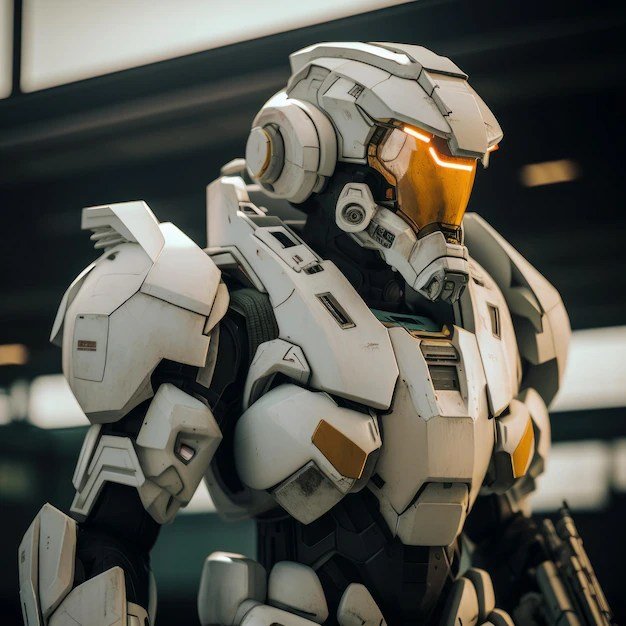
In the vast, sprawling universe of Halo, where ancient Forerunner mysteries intertwine with the relentless heroism of humanity against alien threats, fans have always found fertile ground for imagination. But what if the barrier to creating epic sagas or intricate lore concepts wasn't your writing skill, but merely a creative spark waiting for the right tool? Enter AI-Generated Halo Stories & Lore (Fanfiction & Concepts), a rapidly evolving frontier that's dramatically expanding the horizons of what's possible for every fan.
This isn't about replacing human creativity; it's about augmenting it, offering a powerful co-pilot for crafting narratives that feel authentically Halo yet are entirely new. Forget staring at a blank page; with sophisticated AI, you're now equipped to conjure up everything from a Spartan's untold skirmish to the forgotten history of a Covenant faction.
At a Glance: What You'll Discover
- How AI tools like PowerDreamer are revolutionizing Halo fanfiction generation.
- The power of advanced AI models to create human-like, unique Halo narratives.
- Practical strategies for leveraging AI to develop compelling characters, plots, and lore.
- Why human oversight remains critical, even with the most sophisticated AI.
- Tips for refining AI-generated content to truly make it your own.
Unleashing the Inner Lore Master: The Rise of AI in Halo Fanfiction
For decades, Halo fanfiction has thrived on forums, archives, and personal blogs, fueled by a community passionate about expanding the universe. Yet, even the most dedicated writers can hit creative blocks, struggle with consistent tone, or simply lack the time to pen their grand visions. This is where AI steps in as a game-changer. Imagine an intelligent assistant that understands the nuances of the Halo universe, from the UNSC's military doctrine to the intricate biology of the Sangheili, and can translate your ideas into coherent, engaging prose.
Tools specifically designed for fan content, such as PowerDreamer, are at the forefront of this revolution. This platform alone has generated an astounding 235,365 AI outputs for over 70,000 users, demonstrating a clear appetite for AI-assisted storytelling. It's no longer a niche curiosity; it's a powerful current transforming how fans interact with and contribute to their favorite universes. If you're keen to dive deeper into the broader landscape of AI-driven content for the Master Chief's universe, you can always Explore Halo AI generated content.
Beyond the Blank Page: How AI Sparks Halo Creativity
The magic of these AI generators lies in their ability to take a prompt – be it a character concept, a plot idea, or a specific lore query – and return rich, detailed text. PowerDreamer, for instance, isn't just spitting out random words. Its AI is designed to create fanfiction and names with explanations, providing not just content but context.
What makes this truly exciting for Halo fans?
- Rapid Prototyping: Got an idea for a new Spartan company? A hidden Forerunner artifact? The AI can quickly generate multiple concepts (up to 10 outputs in parallel on PowerDreamer), giving you a dozen starting points in moments. This is invaluable for brainstorming and overcoming initial creative inertia.
- Style and Tone Consistency: Maintaining a consistent voice is crucial for Halo lore. Whether you want the gritty realism of a Marine's journal or the ancient, prophetic tone of a Forerunner terminal, advanced AI models allow users to select a Personal Style & Tone. This ensures that the generated text aligns with the specific atmospheric feel you envision for your story, preventing it from sounding generic.
- Deep Lore Integration: These AIs are trained on vast datasets, including, presumably, extensive Halo lore. This means they can often suggest connections, character interactions, or technological details that feel authentic to the universe, even if they're entirely new creations.
Crafting Your Canon: Mastering AI for Authentic Halo Lore
While the AI is powerful, think of it as a master craftsman's apprentice rather than the master itself. To truly craft your canon, you need to be in the driver's seat. This is where features like "Power Mode" and "Advanced AI Models" come into play.
Using Power Mode, often leveraging an Advanced AI model, pushes the AI's capabilities beyond what you might find in many popular chatbots. It's designed to generate more nuanced, detailed, and less predictable content. This means:
- Richer Narratives: Expect more complex character motivations, intricate plot twists, and vivid descriptions that immerse readers directly into the Halo battlefields or mysterious alien worlds.
- Avoiding Generic Output: The aim is to prevent content from sounding like it was simply assembled from common tropes. Instead, the Advanced AI strives for originality within the established Halo framework.
- Higher-Quality Names and Explanations: When generating names for characters, locations, or weapons, the AI can provide fitting explanations that enhance the lore, making your creations feel integrated and meaningful.
However, power comes with responsibility. Even the most sophisticated Large Language Models (LLMs) inherently have a margin of error. This isn't a flaw; it's a characteristic of how these models learn and generate text. What does this mean for you? You must review the generated text. Always.
Navigating the AI Frontier: Quality, Control, and Avoiding Generic Tropes
When working with AI for Halo stories, your role shifts from sole creator to editor-in-chief and universe steward. You're curating the AI's output, guiding it, and polishing it to perfection.
The Importance of Human Oversight
- Fact-Checking Lore: While AI is good at synthesizing information, it can sometimes "hallucinate" facts or subtly misrepresent established lore. Always cross-reference crucial details against official Halo wikis or canon sources.
- Ensuring Emotional Resonance: AI can mimic emotions, but true emotional depth often requires human empathy. You might need to tweak dialogue or descriptions to make characters' feelings and motivations truly resonate with readers.
- Injecting Unique Voice: Even with style and tone selection, your personal authorial voice is what will distinguish your fanfiction. Use the AI as a springboard, then infuse your unique perspective, humor, or dramatic flair.
Understanding AI Model Differences
Most platforms offer different AI models, typically with "Standard" and "Advanced" tiers.
| Feature | Standard AI Model | Advanced AI Model |
|---|---|---|
| Creativity | Good, but can sometimes be more generic | High, aims for unique, less predictable output |
| Depth of Detail | Adequate for basic concepts | Excellent, provides richer narratives |
| Lore Nuance | Understands basic lore | Better grasp of complex lore relationships |
| Human-like Text | Generally good | More refined, less "AI-sounding" |
| Resource Cost | Lower credit consumption | Higher credit consumption |
| Access | Often widely available | Generally available to paying users |
| The Advanced AI Model, while consuming more credits, often provides a significantly better foundation for complex Halo narratives, saving you editing time in the long run. Think of it as investing in higher-quality raw materials for your masterpiece. |
Addressing the AI 'Fingerprint': Tools and Trust in Generated Text
A common concern in the age of AI is the detectability of AI-generated content. You might wonder if your carefully crafted Spartan saga will be flagged as machine-made. It's true that AI detectors exist, but they can be notoriously unreliable, often producing misleading results (e.g., detecting human-written text as AI-generated).
For Halo fanfiction, the focus should be less on avoiding detection and more on ensuring quality and originality. If you're concerned about your text sounding too "robotic" or want to give it an extra human touch, some platforms offer solutions. PowerDreamer, for example, provides an AI Paraphrasing Tool.
This tool can be invaluable for:
- Refining Phrasing: Taking AI-generated sentences and rephrasing them to sound more natural, distinctive, or aligned with a specific character's voice.
- Adding Nuance: Introducing subtle shifts in tone or emphasis that might be harder for the initial AI generation to capture.
- Bypassing Potential Flags (if desired): While unreliable, if you're writing for a platform that heavily uses AI detection and you want to be extra cautious, paraphrasing can help obscure the original AI pattern.
Ultimately, the best "AI detector" is a discerning human reader. If your story is engaging, well-written, and authentically Halo, its origin will matter far less than its impact.
Practical Tips for Generating Stellar Halo Narratives
Ready to command your own AI legion of storytellers? Here’s how to get the best results:
- Be Specific with Your Prompts: "Write a Halo story" is too vague. Try: "Generate a short story about a lone Spartan-III sniper holding off a Covenant assault on a Forerunner relic world, focusing on their psychological state and dwindling ammunition."
- Define Key Elements: Specify characters (Master Chief, an OC Spartan, an Elite Zealot), locations (Installation 07, Reach, a new planet), and conflicts (Flood outbreak, Covenant invasion, political intrigue).
- Set the Mood: Use descriptive adjectives. Do you want a "gritty, desperate" story, a "heroic and triumphant" one, or a "dark, mysterious" tale exploring ancient secrets?
- Iterate and Refine: Don't settle for the first output. Generate multiple versions, pick the strongest elements from each, and then use follow-up prompts to expand or modify sections.
- Use the Personal Style & Tone Option: If available, select tones like "Military Sci-Fi," "Epic," "Gritty," or "Mysterious" to guide the AI's writing style.
- Edit Ruthlessly: The AI provides the clay; you are the sculptor. Trim unnecessary exposition, strengthen weak verbs, ensure logical consistency, and add your personal creative flourishes.
- Consider Lore Constraints: Decide whether you're writing strict canon-compliant fanfiction or exploring an alternate universe (AU). This will inform how much freedom you give the AI (and yourself) with established lore.
The Future of Forerunner Fables: What's Next for AI and Halo Fan Content?
The integration of AI into creative writing, especially for rich universes like Halo, is still in its early chapters. As LLMs continue to evolve, becoming even more sophisticated in understanding context, nuance, and character development, the potential for AI-generated Halo stories and lore will only grow.
We might see:
- Interactive Story Branches: AI could adapt narratives in real-time based on reader choices.
- Dynamic Lore Generation: Entire planetary histories, species evolutions, or faction backstories could be generated with unprecedented depth and internal consistency.
- Personalized Campaigns: Imagine an AI-generated Halo story tailored specifically to your preferences, featuring your ideal Spartan, preferred enemies, and favorite vehicles.
This isn't just about speed or volume; it's about making complex storytelling accessible to a wider audience, empowering more fans to contribute their unique perspectives to the Halo saga.
Your Guide to the Stars: Getting Started with AI-Powered Halo Storytelling
The vast expanse of the Halo universe awaits your tales. Whether you're a seasoned fanfiction writer looking for a creative boost or a newcomer eager to explore storytelling without the daunting blank page, AI tools offer an incredible pathway.
Begin by exploring a platform like PowerDreamer. Experiment with simple prompts. Don't be afraid to fail; every generated output, even one you discard, teaches you more about how to guide the AI effectively. Remember, the AI is a tool, and like any powerful tool, its effectiveness depends entirely on the skill and vision of the user.
Embrace this new frontier. Your next epic Halo story, a saga worthy of the Master Chief himself, might just be a few well-crafted prompts away. Go forth, Spartan, and let the AI assist you in forging new legends.